
The Stone Lab organizes its work into three collaborative teams: Team Mn (biogenic manganese oxides), Team Zn (zinc-binding inhibitors), and Team Biocat (enzyme biocatalysis and remediation). Each team combines undergraduate research with synthetic, computational, and biochemical approaches.
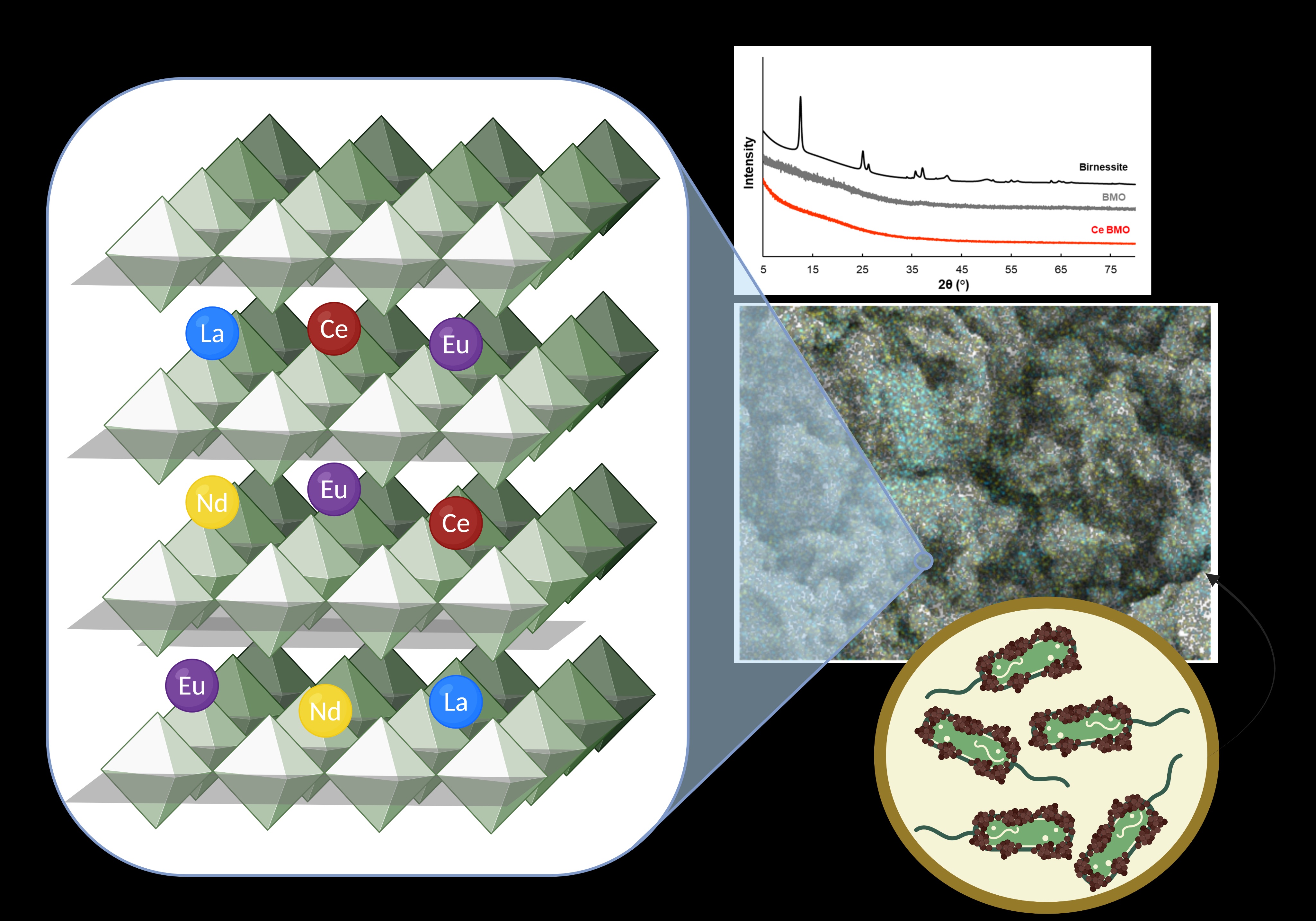
Team Mn studies biogenic manganese oxides (BMOs) produced by Pseudomonas putida MnB1. These materials are characterized structurally and compositionally and evaluated for water-oxidation catalysis and for the sequestration of rare-earth elements (La, Ce, Eu, Nd). Mixed-metal BMOs, including iron- and cerium-incorporated forms, are compared with abiotic birnessite to understand how biological templating influences reactivity and ion uptake.
Selected publications
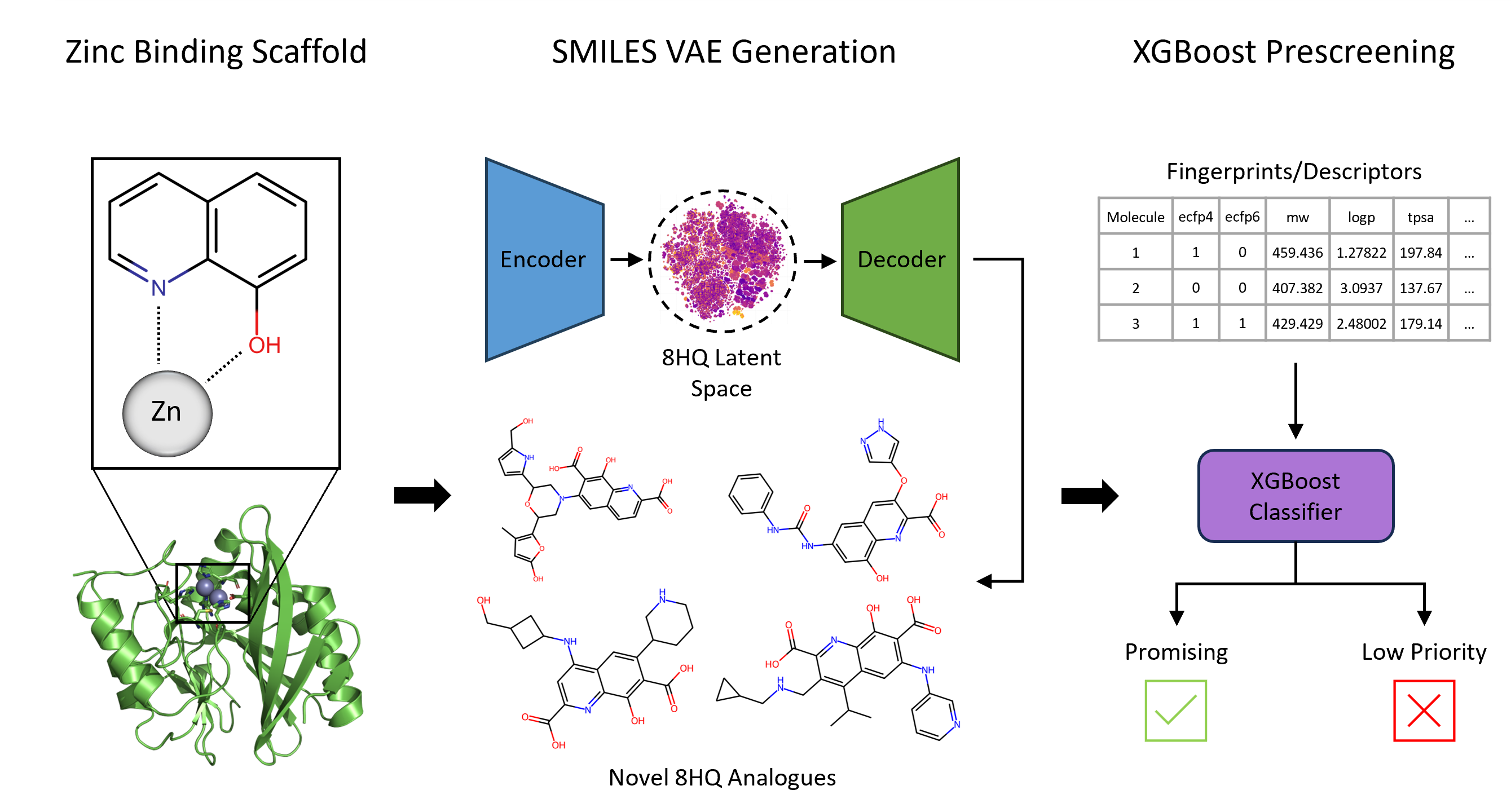
Team Zn develops machine-learning workflows to design and prioritize 8-hydroxyquinoline (8HQ) based inhibitors of zinc-dependent enzymes, particularly NDM-1 metallo-β-lactamases. A variational autoencoder generates novel 8HQ analogues in SMILES space; these candidates are then ranked with an XGBoost classifier trained on molecular fingerprints and descriptors. Complementary experimental and computational studies examine how 8HQ ligands coordinate to biomimetic zinc complexes and to HDAC8.
Selected publications
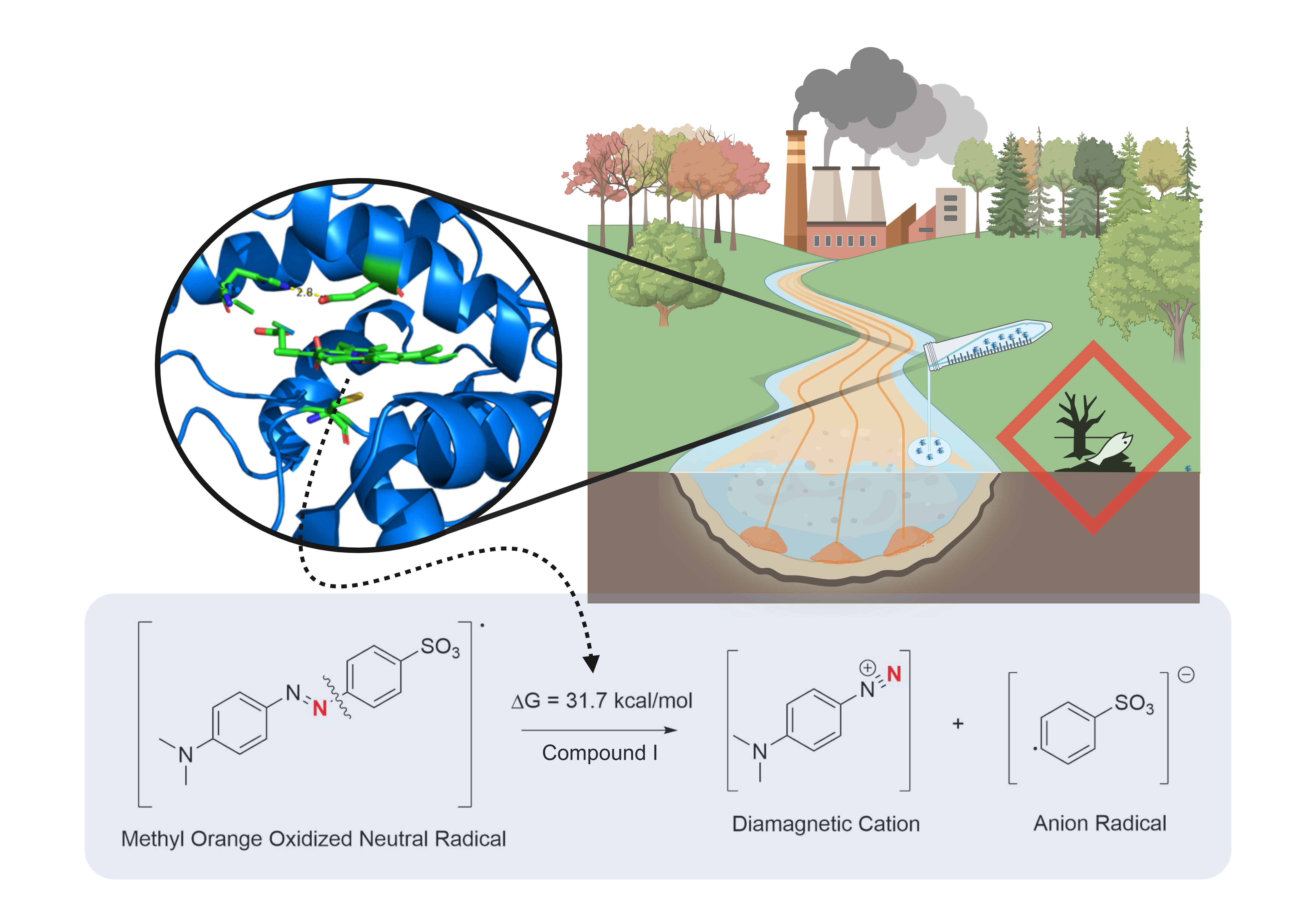
Team Biocat investigates the catalytic mechanisms and engineering of heme enzymes, with a focus on chloroperoxidase from Caldariomyces fumago. Recent work distinguishes oxidative C–N bond cleavage from chlorination pathways in azo-dye decolorization, supporting enzyme-based remediation strategies. The team also develops enzyme–MOF biocatalysts by immobilizing multi-enzyme systems on zirconium-based frameworks for improved stability and recyclability.
Selected publications
See the full Publications page for the complete list.